
Outdoor spaces have become a major part of modern real estate development in India.
Residential societies, luxury apartments, villas, townships, clubhouses and mixed-use developments increasingly include landscaped gardens, pool decks, terraces, balconies, courtyards and common seating areas as part of the overall project experience.
Because of this, outdoor furniture is no longer treated as an afterthought.
For developers, architects, landscape designers, project consultants and procurement teams, choosing the right outdoor furniture can influence how a property looks, how residents use common spaces and how well those areas perform over time.
The requirements are also very different from buying furniture for a private home.
Furniture used in real estate projects may serve hundreds of residents, remain outdoors for long periods and require consistent design across multiple towers, amenities and common areas.
This guide explains how to choose outdoor furniture for real estate projects in India, including suitable furniture types, materials, applications, customization, maintenance and bulk procurement considerations.
Why Outdoor Furniture Matters in Real Estate Projects
Outdoor spaces are increasingly important in residential developments because they contribute directly to lifestyle positioning.
A well-designed clubhouse lawn, pool area or terrace can make a project feel more complete and premium.
Outdoor furniture helps turn these spaces into usable environments.
Common real estate applications include:
- Clubhouse seating
- Poolside areas
- Landscaped gardens
- Rooftop terraces
- Apartment balconies
- Villa patios
- Courtyards
- Community lawns
- Children’s recreation areas
- Senior citizen zones
- Outdoor cafés
- Reception spillover spaces
Without the right furniture, even a well-designed landscape can remain underused.
How Real Estate Outdoor Furniture Differs From Residential Furniture
Furniture for a housing project is usually exposed to much heavier use than furniture in an individual home.
A chair in a residential balcony may be used by only a few people.
A chair in a clubhouse or common garden can be used by dozens of residents every day.
This changes the specification requirements.
Real estate outdoor furniture should generally be evaluated for:
- Commercial durability
- Frequent use
- Weather resistance
- Easy maintenance
- Stable construction
- Consistent finishes
- Replacement availability
- Bulk production
- Long-term appearance
The goal is to balance design with project practicality.
Best Outdoor Furniture for Clubhouses
Clubhouses are often the social centre of residential developments.
They may include pools, lawns, cafés, terraces, lounges and event spaces.
Suitable outdoor furniture can include:
- Wicker sofas
- Lounge chairs
- Coffee tables
- Dining sets
- Pool loungers
- Outdoor benches
- Bar stools
- Daybeds
A coordinated wicker furniture collection can work well in clubhouse areas because woven furniture can support both lounge and dining applications.
For larger clubhouses, designers may create several seating zones rather than using one furniture type throughout.
Poolside Furniture for Residential Developments
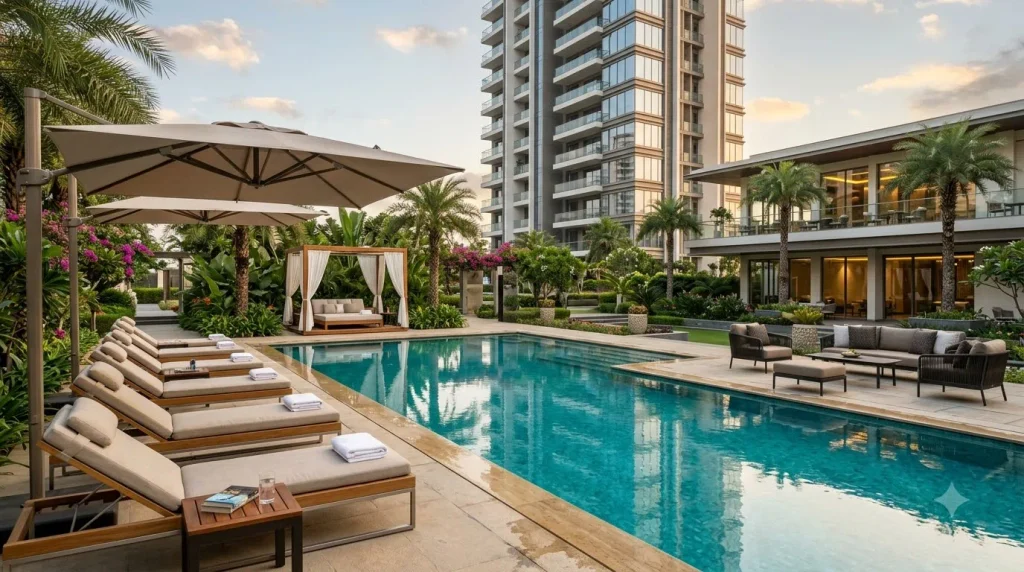
Swimming pools are common in premium apartment projects and gated communities.
Furniture around the pool should support relaxation without reducing circulation space.
Common options include:
- Pool loungers
- Sunbeds
- Side tables
- Daybeds
- Outdoor sofas
- Cabanas
Explore poolside loungers for residential projects with swimming pools or clubhouse deck areas.
For luxury developments, adding cabanas can create more private shaded seating around premium pool environments.
Furniture should be planned with the actual pool deck dimensions rather than selected only by appearance.
Outdoor Furniture for Apartment Balconies
Balconies are one of the most common outdoor areas in residential projects.
However, balcony sizes vary considerably between compact apartments and luxury residences.
Suitable balcony furniture may include:
- Compact chairs
- Bistro sets
- Small tables
- Two-seater sofas
- Folding furniture
- Compact loungers
Furniture dimensions are particularly important.
Oversized furniture can reduce circulation and make a balcony feel smaller.
Developers furnishing sample apartments, serviced residences or premium units should use actual balcony measurements before finalizing furniture.
Furniture for Luxury Villas
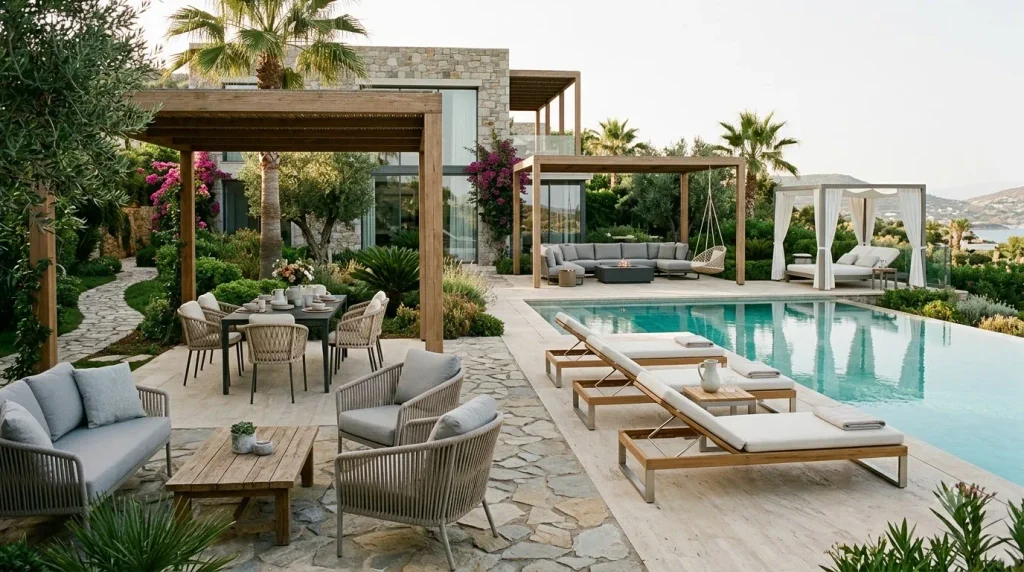
Luxury villa developments generally allow more flexibility in outdoor furniture selection.
Possible areas include:
- Private gardens
- Pool decks
- Patios
- Terraces
- Balconies
- Courtyards
- Entrance areas
Furniture options may include large sofas, dining sets, loungers, swings, cabanas and pergolas.
For villas with larger outdoor spaces, pergolas can help create defined seating or dining zones.
Wicker and outdoor rope furniture can also create a relaxed resort-inspired appearance.
Outdoor Furniture for Landscaped Gardens
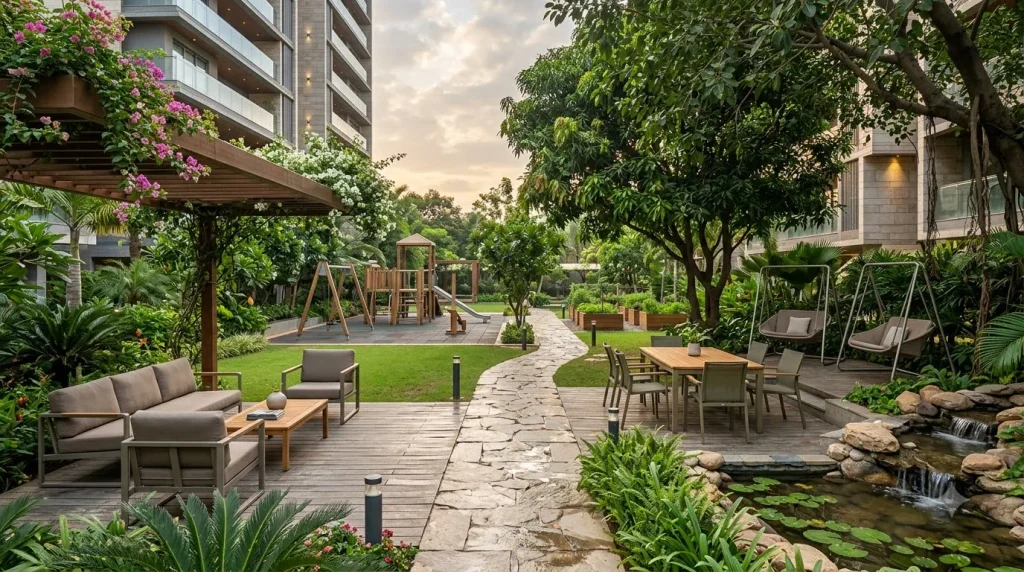
Landscaped common areas are frequently used for informal gatherings, walking breaks and community interaction.
Furniture for these areas may include:
- Benches
- Lounge chairs
- Coffee tables
- Outdoor sofas
- Swings
- Dining sets
Placement matters as much as furniture selection.
Seats can be positioned near:
- Walking paths
- Water features
- Play areas
- Lawns
- Shaded trees
- Community gardens
The furniture should complement landscaping rather than obstruct it.
Wicker Furniture for Real Estate Projects
Wicker furniture is popular in residential projects because it can work in both contemporary and resort-style environments.
It is suitable for:
- Clubhouses
- Balconies
- Pool decks
- Gardens
- Rooftops
- Villas
Synthetic wicker is commonly used outdoors because it can provide the appearance of woven furniture while being more practical for exterior conditions than many natural fibres.
When selecting wicker furniture for a real estate project, procurement teams should inspect both the weave and the underlying frame.
Bulk consistency also matters.
The colour and finish of furniture supplied across multiple phases should remain as consistent as possible.
Outdoor Swings for Residential Projects
Swings can become attractive lifestyle elements in gardens, terraces and villa developments.
They are commonly used in:
- Clubhouse lawns
- Private gardens
- Balconies
- Courtyards
- Terrace areas
Explore wicker swings for residential and community spaces that require a relaxed leisure element.
For larger projects, stability and structural support should be reviewed carefully.
Best Materials for Real Estate Outdoor Furniture in India
India presents a wide range of climate conditions.
Furniture used in Delhi, Mumbai, Goa, Bengaluru or Jaipur may face very different environmental exposure.
Material selection should therefore be project-specific.
Aluminium
Aluminium is widely used for outdoor furniture because it offers strength with relatively low weight.
Powder-coated aluminium can be used for:
- Chairs
- Tables
- Sofa frames
- Loungers
- Bar furniture
It is especially useful where staff may need to move furniture frequently.
Synthetic Wicker
Synthetic wicker is commonly used in housing projects because it works well visually in gardens, poolside areas and balconies.
It is available in different colours and weave styles.
Outdoor Rope
Outdoor rope furniture works particularly well in contemporary residential developments.
It can create a lighter visual appearance and is suitable for both dining and lounge furniture.
Wood
Wood can create a warm, premium appearance.
It works particularly well in luxury villas, courtyards and high-end clubhouses.
However, outdoor wooden furniture usually requires ongoing maintenance and suitable exterior finishes.
Outdoor Fabrics
Cushions and upholstered furniture should use materials suitable for outdoor exposure.
Important factors include:
- UV resistance
- Moisture resistance
- Easy cleaning
- Colour retention
- Drying performance
Removable covers can simplify long-term maintenance.
Furniture for Monsoon Conditions
Many regions in India experience extended monsoon seasons.
Outdoor furniture should therefore be planned for heavy rainfall and humidity.
Consider:
- Drainage
- Cushion storage
- Quick-drying upholstery
- Furniture covers
- Water-resistant materials
- Raised furniture bases
- Easy-clean surfaces
Furniture should not trap water for long periods.
Project teams should also plan where removable cushions will be stored during heavy rain.
Furniture for High-UV Areas
Open terraces, rooftops and pool decks may receive direct sunlight for much of the day.
UV exposure can affect:
- Fabrics
- Plastics
- Wicker
- Finishes
- Coatings
Developers should ask suppliers whether materials are designed for long-term outdoor exposure.
Shade elements such as pergolas, umbrellas and covered structures can also help improve comfort.
Furniture for Coastal Real Estate Projects
Projects near the coast require additional attention because humidity and salt exposure can accelerate deterioration.
Important areas to review include:
- Metal frames
- Fasteners
- Hardware
- Hinges
- Surface coatings
- Adjustable mechanisms
Routine cleaning is also important in coastal environments.
Developers working on beach residences or coastal townships should discuss environmental conditions with suppliers before finalizing specifications.
Custom Outdoor Furniture for Real Estate Developers
Customization can be especially useful for large residential projects.
Developers may need furniture that matches:
- Project branding
- Landscape design
- Architecture
- Clubhouse interiors
- Colour palettes
- Premium positioning
Manufacturers may customize:
- Dimensions
- Frame designs
- Wicker colours
- Rope colours
- Cushion thickness
- Fabrics
- Finishes
- Table sizes
- Seating configurations
Architects may provide drawings, mood boards or reference images.
For high-volume projects, prototypes can help confirm scale, comfort and finishing before bulk production.
Bulk Outdoor Furniture Procurement
Real estate developers often require furniture across multiple spaces and phases.
A structured procurement process can improve consistency.
Typical stages may include:
- Site requirement review
- Area-wise furniture planning
- Product selection
- Material selection
- Dimension confirmation
- Finish approval
- Fabric approval
- Sample approval
- Quantity confirmation
- Production
- Quality inspection
- Packaging
- Delivery
- Installation where required
A developer may also plan furniture separately for clubhouse, poolside, rooftop and balcony areas.
Furniture Standardization Across Multiple Towers
Large residential projects often include several towers or phases.
Standardization can make future replacement easier.
Developers may benefit from documenting:
- Product code
- Dimensions
- Material
- Finish
- Fabric
- Quantity
- Location
This also helps project teams reorder matching furniture later.
Without standardization, different phases may end up with inconsistent finishes or dimensions.
Installation Considerations
Some outdoor furniture can simply be placed after delivery.
Other items may require assembly or installation.
Examples include:
- Pergolas
- Cabanas
- Swings
- Large modular furniture
- Fixed structures
Installation planning should consider:
- Site access
- Lift dimensions
- Stair access
- Parking access
- Loading areas
- Assembly space
- Floor protection
- Anchoring requirements
For under-construction projects, delivery should be coordinated with site readiness.
Outdoor Furniture Maintenance in Housing Projects
Maintenance is especially important in shared residential spaces.
Society management teams or facility managers should establish simple maintenance procedures.
Furniture should be checked for:
- Loose fasteners
- Damaged weaving
- Worn cushions
- Stains
- Surface damage
- Unstable components
Regular cleaning can extend the usable life of furniture.
Cushions should be stored when required during heavy weather.
Small repairs should be addressed before damage becomes more significant.
How Developers Should Choose an Outdoor Furniture Supplier
Before finalizing a supplier, developers should ask:
- Does the supplier understand real estate projects?
- Can they manufacture large quantities?
- Can products be customized?
- Can they work from drawings?
- Are samples available?
- Can finishes be standardized across phases?
- Are replacement units available later?
- What materials are recommended for the location?
- How are quality checks handled?
- Is installation available where needed?
These questions help determine whether a supplier can support a project beyond simply selling furniture.
Cost Considerations for Real Estate Projects
Outdoor furniture cost depends on several variables.
These may include:
- Material
- Quantity
- Product size
- Design complexity
- Upholstery
- Customization
- Packaging
- Transportation
- Installation
Developers should consider lifecycle value rather than only initial price.
A lower-cost product that requires frequent replacement may cost more over time than furniture designed for commercial use.
Frequently Asked Questions
What outdoor furniture is best for real estate projects?
Common options include wicker sofas, dining sets, loungers, benches, swings, cabanas, balcony furniture and clubhouse seating. The ideal mix depends on the project type and amenities.
Which material is best for outdoor furniture in India?
Powder-coated aluminium, synthetic wicker, outdoor rope and selected woods are commonly used. The best material depends on weather exposure and maintenance requirements.
Can real estate developers customize outdoor furniture?
Yes. Dimensions, finishes, fabrics, colours and configurations can often be customized for large projects.
What furniture works best around residential pools?
Pool loungers, side tables, daybeds, cabanas and outdoor sofas are commonly used around residential pool areas.
Is wicker furniture suitable for apartment projects?
Synthetic wicker can be suitable for clubhouses, balconies, gardens and pool decks when the furniture is designed for outdoor use.
How should developers choose furniture for balconies?
Furniture should be compact, appropriately scaled and based on actual balcony measurements.
Plan Outdoor Furniture as Part of the Project Design
Outdoor furniture works best when it is considered early in the design process.
Developers, architects and landscape consultants should think about furniture together with circulation, landscaping, lighting and amenity planning.
A clubhouse lawn requires a different furniture strategy from a rooftop terrace.
A luxury villa requires a different approach from a compact apartment balcony.
By planning furniture according to actual use, weather exposure, available space and project positioning, developers can create outdoor areas that remain attractive and functional for residents over the long term.
Explore wicker furniture, poolside loungers, cabanas, pergolas and wicker swings, or contact us to discuss outdoor furniture requirements for residential and real estate projects in India.